"Hard water" sounds vague but it's a measurable thing — total dissolved solids (TDS), specifically calcium and magnesium. In Queensland, hardness varies dramatically between suburbs depending on your water source. If your kettle scales up, your soap doesn't lather, or your shower screen gets cloudy spots within days of cleaning, you've got hard water. Here's where it's worst.
The Queensland water hardness map
Queensland Urban Utilities and SEQ Water publish quality reports each year. Quick summary:
- Brisbane CBD & inner suburbs: moderate hardness, ~70–110 mg/L CaCO₃
- Brisbane outer (Ipswich, Logan, Redlands): moderate-to-hard, 100–180 mg/L
- Gold Coast (Hinze Dam supply): moderate, 80–130 mg/L
- Sunshine Coast: moderate, 60–120 mg/L
- Toowoomba & Darling Downs: HARD, often 200+ mg/L
- Mackay & surrounds: moderate-to-hard
- Townsville & Cairns: moderate
- Western Queensland (bore-fed towns): often very hard, 300+ mg/L
For context: Melbourne is ~50 mg/L (very soft). Adelaide is ~250 mg/L (notoriously hard).
The 30-second at-home test
You don't need a lab. Take a clean clear glass, fill 1/3 with tap water, add a few drops of liquid hand soap, cap with your hand, shake hard for 10 seconds.
- Lots of fluffy bubbles, water clear: soft water, <75 mg/L
- Some bubbles, water slightly cloudy: moderate hardness, 75–150
- Few bubbles, water visibly cloudy: hard water, >150
- Almost no bubbles, milky water: very hard, >250
You can also buy a TDS meter at Bunnings for ~$25 — it gives you a number directly. Anything over 200 is hard by Australian standards.
Why hardness matters
- Scale in appliances. Hot water systems, dishwashers, kettles, washing machines all develop calcium carbonate deposits. Heating elements work harder, last shorter.
- Soap doesn't lather. Calcium ions react with soap to form scum. You use more product to get clean.
- Shower screen / tap spotting. Cloudy mineral residue every time water dries.
- Hair feels rough. Calcium binds to keratin similarly to chlorine.
- Tea / coffee tastes flatter. Higher TDS interferes with extraction.
What doesn't fix it
- Boiling. Calcium just deposits as scale at the bottom of your kettle.
- Standard carbon filters. Carbon removes chlorine and chemicals, not minerals.
- Reverse osmosis. Removes hardness, but produces too much waste water for whole-house use.
What does fix it
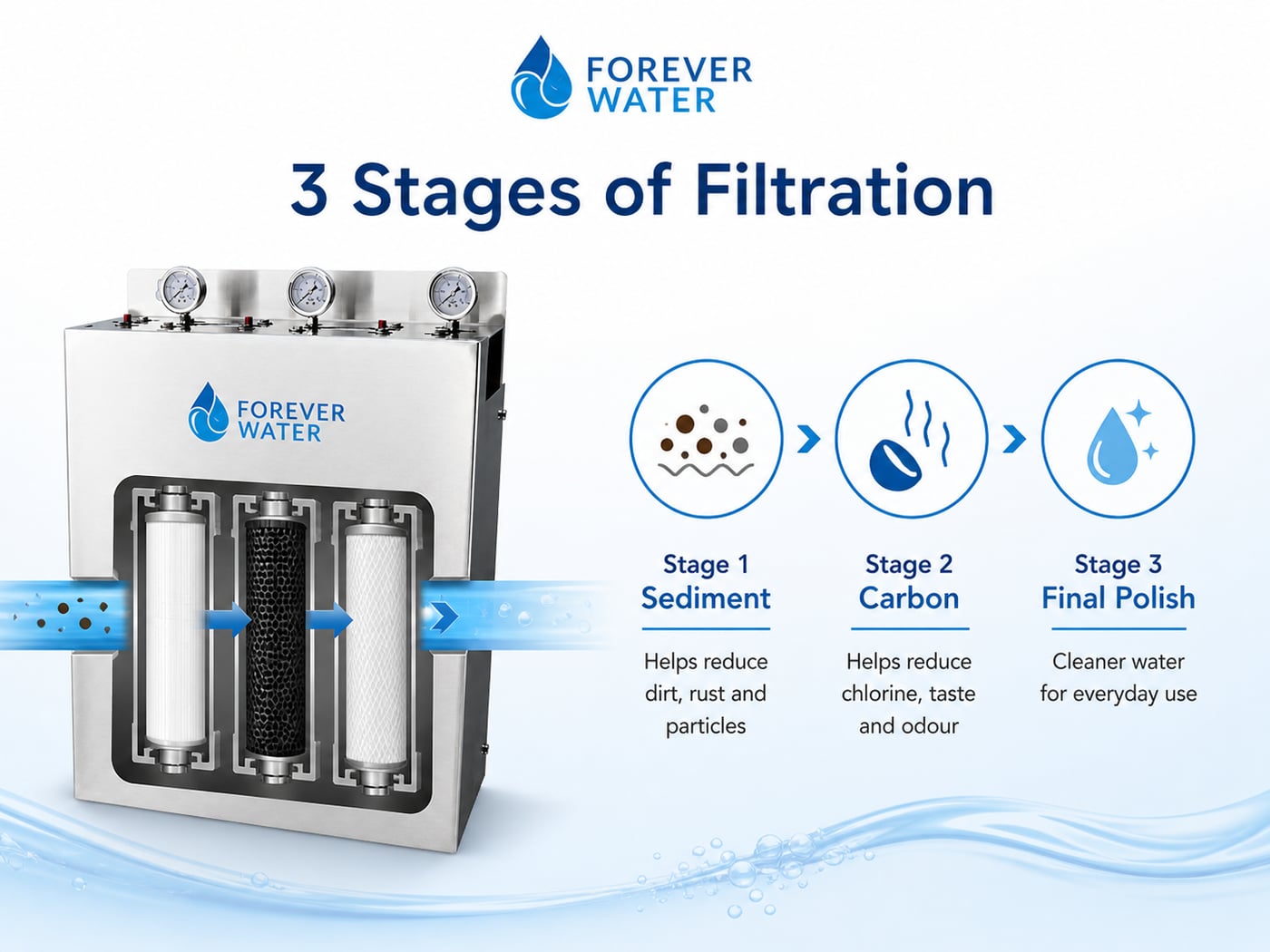
- Polyphosphate dosing — a tiny dose of food-grade polyphosphate keeps calcium in solution rather than depositing as scale. Doesn't reduce hardness numbers but stops the visible damage. This is what our HPF-3 system's stage 3 does.
- Ion-exchange water softener — swaps calcium/magnesium for sodium. Effective but adds sodium to drinking water (not great for low-salt diets).
- Magnetic / electromagnetic descalers — anecdotal evidence at best, no consistent scientific support.
Should you do something about it?
If you're in moderate hardness (most Brisbane suburbs), it's a quality-of-life decision rather than a necessity. If you're in hard or very-hard territory (Toowoomba, parts of Ipswich, much of regional QLD), you're paying for it whether you address it or not — in shorter appliance life, more cleaning chemicals, and dryer skin and hair. A whole-house system with polyphosphate polish (like our HPF-3) typically pays back in 4–6 years just on dishwasher and washing-machine longevity.
Read next: Chlorine in shower water · Whole-house vs. under-sink